
LGBTQ+ Landmarks and Historic District
Proposed Lavender Heights District and LGBTQ+ Landmarks
Background
The Lavender Heights Historic District and eight individual landmarks were surveyed and evaluated as part of the LGBTQ Historic Experience Project (2024). The project found these properties to have significant importance to the LGBTQ community and recommended them as eligible for listing on the Sacramento Register of Historic and Cultural Resources.
You can read the historic evaluations for the potential historic district and eight landmarks below:
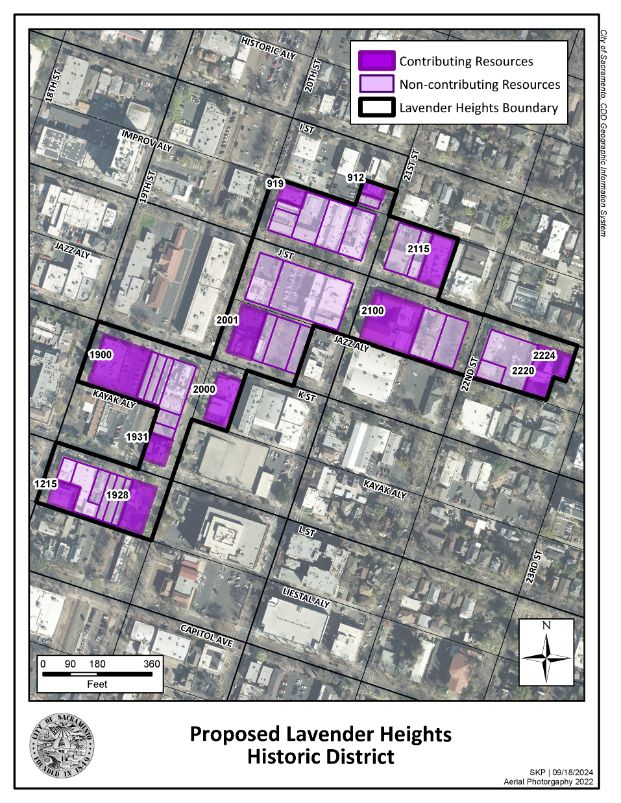
Map showing boundaries of Lavender Heights Historic District in Midtown Sacramento. District centers around 20th and K S
Proposed Lavender Heights Historic District
New Helvetia Roaster -- 1215 19th Street
1215 19th Street is significant as the location of The New Helvetia Roaster, a coffee shop that was a popular meeting place for LGBTQ community members. In an era of discrimination, classified ads placed in the LGBTQ newspaper Mom Guess What…! provided a means for gay and lesbian individuals to meet each other and begin romantic relationships. According to Sacramento resident and former State Assemblyman Dennis Mangers, it was common for gay individuals to meet for coffee at New Helvetia café in the former fire station after work. The café was an integral part of the district's community fabric from 1991 to 2002.
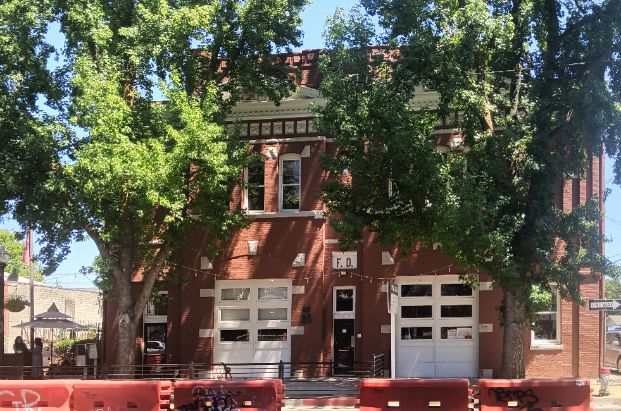
New Helvetia Roaster – 1215 19th Street
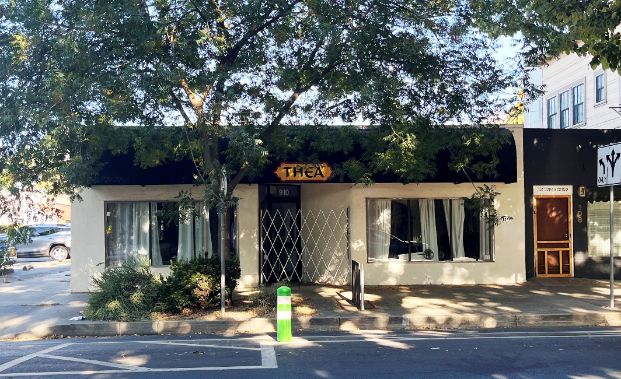
Dr. Harvey Thompson and Dr. Sandy Pomerantz offices / The Open Book – 912 21st Street
Dr. Harvey Thompson and Dr. Sandy Pomerantz offices/The Open Book
The offices of Dr. Harvey Thompson and Dr. Sandy Pomerantz, which later became The Open Book, were significant from 1978 to 1987 and again from 1996-2005. During the AIDS outbreak in the 1980s, Sacramento’s gay and lesbian populations found themselves ostracized from mainstream society and lacking support or funding from government bodies and institutions. At the forefront of local efforts to manage the spread of HIV and to care for the sick and dying were Dr. Harvey Thompson and Dr. Sandy Pomerantz, two Sacramento-based internal medicine physicians. Both members of the gay community themselves, Dr. Thompson and Dr. Pomerantz had mostly gay male patients and focused their work on the treatment of AIDS. Dr. Thompson opened a medical clinic, which mostly served gay men, at 910-912 21st Street in 1978. Dr. Thompson died of AIDS in 1986 at the age of 45. Dr. Pomerantz died of AIDS in 1993 at the age of 44.
In 1996, Larry Bailey and Ron Grantz opened a gay and lesbian bookstore, The Open Book, in the building formerly occupied by Dr. Harvey Thompson and Dr. Sandy Pomerantz’s offices. The Open Book stayed open until midnight and contained a café that hosted small live music performances, offering an important alternative to bars for late-night socializing.
First United Methodist Church – 2100 J Street
The First Methodist Church is significant for hosting the earliest recorded LGBTQ event in Lavender Heights in 1967. That year, Sacramento’s earliest LGBTQ advocacy group, Americans for Responsible Citizenship (ARC), hosted a forum titled “The Homosexual 1967 Sacramento” at the church. Since then, the church has had a continuous reputation for offering a welcoming spiritual outlet for the LGBTQ community.
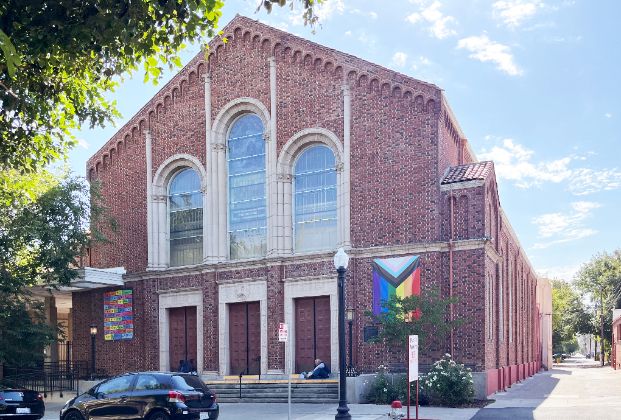
First United Methodist Church – 2100 J Street
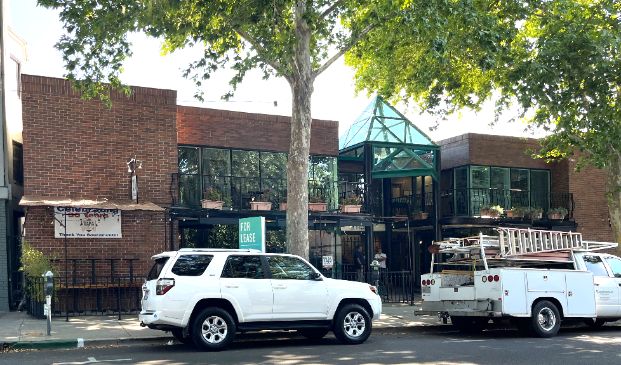
Sacramento AIDS Foundation offices – 2115 J Street
Sacramento AIDS Foundation offices – 2115 J Street
The Sacramento AIDS Foundation offices at 2115 J Street, active from 1983-1984, are significant for their role in the Lavender Heights Historic District’s efforts to address the AIDS crisis. The organization provided educational advocacy along with emotional and hands-on support to patients through a service called “Hand to Hand.” SAF was a volunteer-run, community-funded organization. Much of the initial funding came from gay bars, including $4,000 from the leather community’s main hub, the Wreck Room, which was used to get the organization started. Funding for much of the first year of operations came from the Sacramento County Public Health Department and various fundraisers and donations.
Sacramento AIDS Foundation offices – 1900 K Street
The Sacramento AIDS Foundation offices at 1900 K Street, active from 1986 to 1994, are significant for their role in continuing the Lavender Heights Historic District’s efforts to address the AIDS crisis. Throughout this time, SAF played an integral and often intersectional role in Sacramento’s gay community, serving as a fundraiser for important medical and educational services and advocating for policy changes, among other capacities. The offices played an important role in health support and advocacy during a critical period of the district’s history.
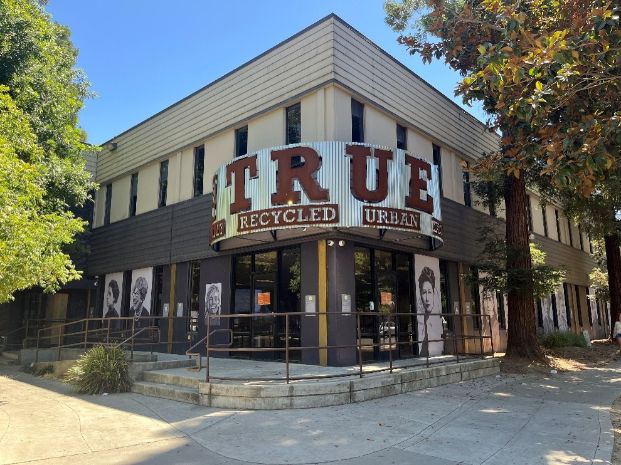
Sacramento AIDS Foundation offices – 1900 K Street
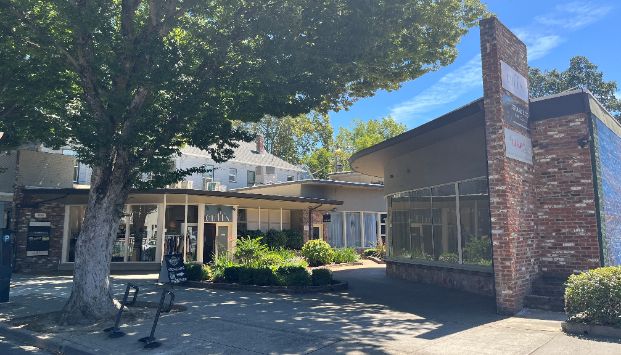
Sacramento Women's Center, Gifted Gardener – 2220 J Street
Sacramento Women's Center, Gifted Gardener – 2220 J Street
2220 J Street is significant as a location of the Sacramento Women’s Center from 1975-1976 and the Gifted Gardener from 1989-1991. Almost all of Sacramento’s first women’s services and aid organizations were started by lesbian-feminists, who took it upon themselves to support women in the community who were otherwise largely overlooked and underserved by institutional systems and authorities. Many of these women’s service organizations spawned from one organization, the Sacramento Women’s Center. The Sacramento Women’s Center provided services including a rape crisis center, a shelter, counseling services, Women’s Employment Services Training, classes, workshops, a library and bookstore, and referrals to relevant community aid agencies. As the Women’s Center fought to fund its mission, it relocated frequently during its early years. 2220 J Street is the earliest location of the Center within the Lavender Heights Historic District.
Lioness Books/Sacramento Women's Center
The Sacramento Women’s Center’s vital community role continued at 2224 J Street from 1983-2000. Longtime Women’s Center staff member Theresa Corrigan purchased the converted Colonial Revival house in 1982, working weekends with a team of volunteers to bring it up to code. She reopened the Women’s Center bookstore in the lower story of the house under the name Lioness Books, drawing inspiration from the role of female lions in a pride, because “in a pride of lions, the [male] lion gets all the credit, but the lionesses do all the work.” The Sacramento Women’s Store’s bookstore and Lioness Books were the first and only women’s and gay/lesbian bookstores in Sacramento for a number of years. For many lesbians who moved to Sacramento, it was the first place they came after they arrived; the bookstore helped them make some of their first connections.
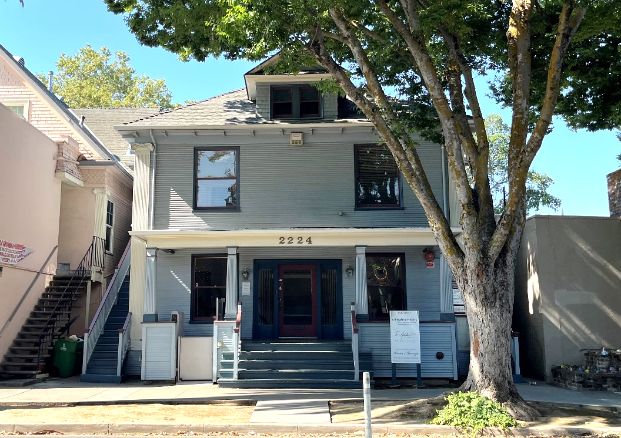
Lioness Books, Sacramento Women's Center, Rape Crisis Center, Women’s Employment Services Training – 2224 J Street
The bookstore hosted events and social gatherings, had bulletin boards with information about women’s and lesbian social groups and organizations, sponsored a softball team for Black lesbians called Sisters and Friends, and provided referrals to women’s, lesbian, and gay service providers. The Sacramento Women’s Center meanwhile continued its operations from the building’s second floor.
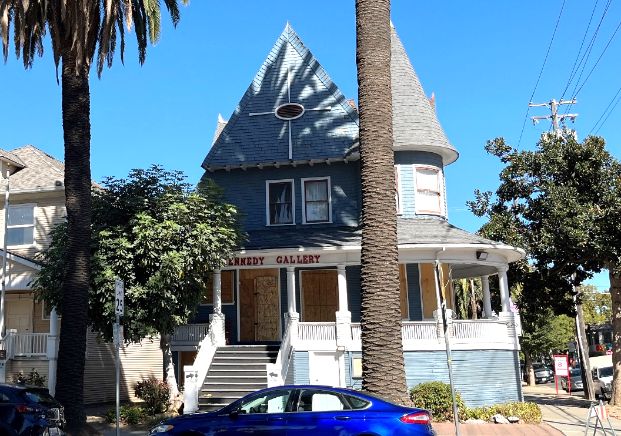
Lambda Community Center, Lambda Players, and AIDS Response Programs (ca. 1987-1997) – 1931 L Street
Lambda Community Center, Lambda Players, and AIDS Response Programs
1931 L Street is significant as the first home of the Lambda Community Center. The most prominent and long-standing of Sacramento’s LGBTQ community centers, the Lambda Community Center was established in the 1980s, using funds procured by Reverend Jerry Sloan, founder of the Sacramento Metropolitan Community Church (MCC). The Lambda Community Center served the full cross-section of Sacramento’s gay, lesbian, bisexual, and transgender community, providing services such as AIDS education, a youth program, political lobbying and letter-writing campaigns, health education, and a monthly newsletter. A theatre troupe that performed plays with gay and lesbian themes, the Lambda Players, started at the Lambda Center on L Street in 1989 as a social and entertainment alternative to the gay bar scene.
Lambda Community Center, Lambda Players, and AIDS Response Programs
919 20th Street is significant for serving briefly as the home of the Lambda Community Center, Lambda Players, and AIDS Response Programs. The building allowed for the community center’s continuing operation, playing a crucial role in the district’s history of health advocacy and LGBTQ support.
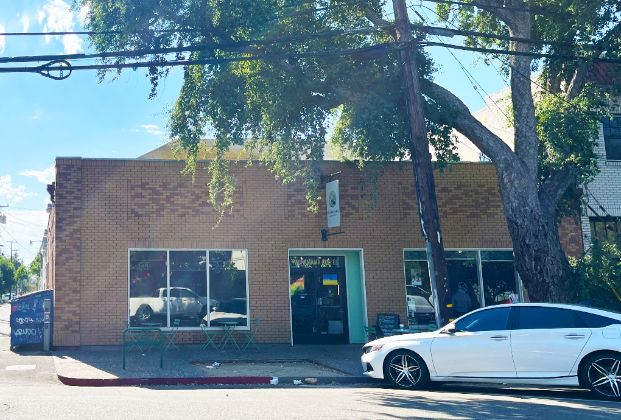
Lambda Community Center, Lambda Players, and AIDS Response Programs (ca. 1997-1999) – 919 20th Street
Lambda Community Center/LGBT Community Center (ca. 1999-2019) – 1927 L Street
1927 L Street is significant as the third home of the Lambda Community Center, allowing the Center’s mission to continue, evolve, and grow in the 21st century. The center changed its name to the Sacramento Gay and Lesbian Center in 2006 and again in 2013 to the Sacramento LGBT Community Center, after a long and arduous effort by the transgender community to be included in the organization’s name. The center moved to 1015 20th Street in 2019.
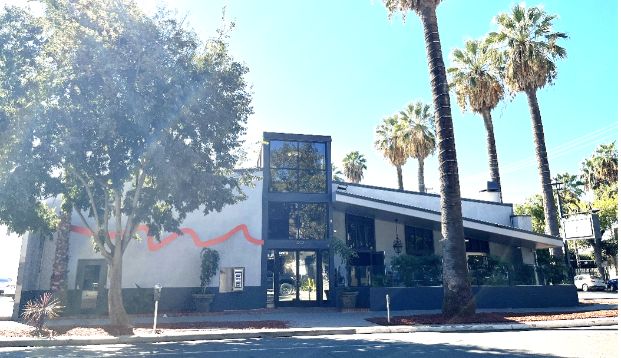
Faces– 2000 K Street
Faces– 2000 K Street
2000 K Street is significant as the location of Faces, a gay bar that was opened in 1985 by Sacramento LGBTQ business owner Myron “Terry” Sidie. The name of the bar was coined by Incredible Edible Place restaurant owner Paul Fitzgerald and was intended to reflect that the bar was open to all communities and all “faces.” The success of Faces brought a groundswell of energy to the intersection of 20th and K Streets, which would become the heart of Lavender Heights. Steve Hansen, the first openly gay City Councilman in Sacramento’s history, described Faces as “that initial piece of life that built this reef of activity [in Lavender Heights].”
The Western/The Depot – 2001 K Street
Originally opened in 1938, by the 1990s the bar then known as The Western had established a reputation as a bar for older gay men. In 1997, TJ Bruce and his mother Marjorie purchased the building and reopened it as a gay bar called The Western Pacific Depot.
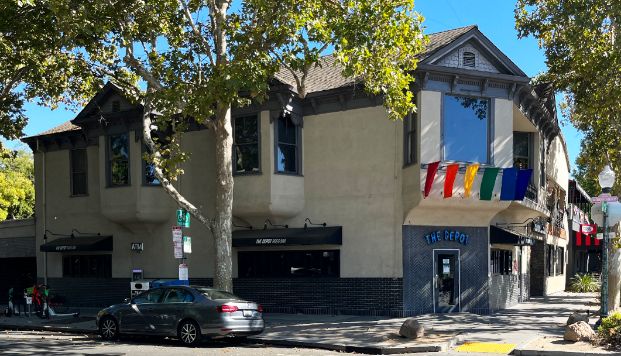
The Western/The Depot – 2001 K Street
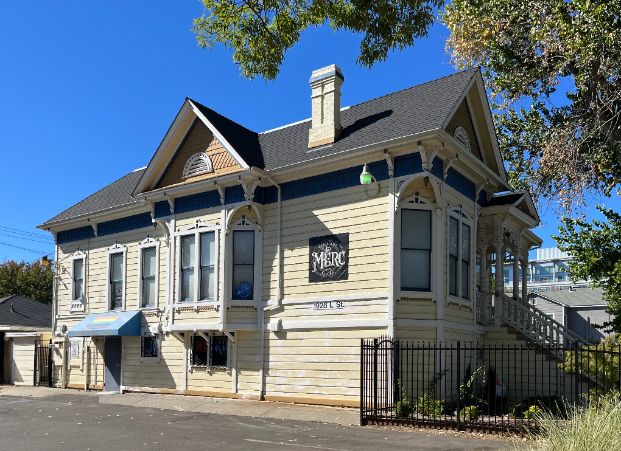
Mercantile Saloon gay bar – 1928 L Street
Mercantile Saloon gay bar – 1928 L Street
1928 L Street has been the location of the Mercantile Saloon since 1976. One of the first gay bars in the city, it was credited with making gay nightlife more visible in Sacramento. The bar became known for welcoming gay Black men at a time when many other gay bars did not. Together with a jazz bar called the Rose Cocktail Lounge across the street at 2001 L Street (demolished), “The Merc” became the main bar and social gathering place for gay Black men in Sacramento.
Proposed Landmarks
The Incredible Edible – 1401 Alhambra Boulevard
Gay businessman Paul Fitzgerald opened the Incredible Edible Place restaurant at 1401 Alhambra Boulevard in 1977. According to a 1979 article in Mom Guess What…! highlighting gay businesses in Sacramento, Fitzgerald’s goal for the Incredible Edible Place was to give Sacramento’s LGBTQ community “good and affordable service.” As a result of the welcoming and safe environment fostered by Fitzgerald, the Incredible Edible Place became a popular meeting place for local LGBTQ clubs and organizations. It was the site of the first meeting of the Advocates for Gay State Employees (AGSE) in 1979. AGSE was formed by a group of State employees earlier that year to provide input on Governor Jerry Brown’s executive order, prohibiting discrimination against State employees on the basis of sexual preference.
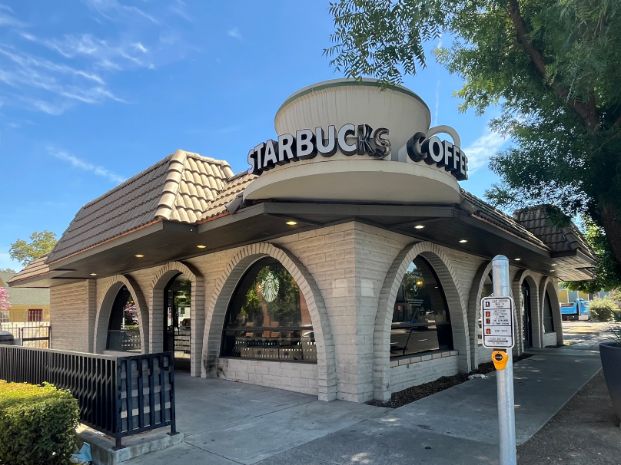
The Incredible Edible – 1401 Alhambra Boulevard Read the landmark nomination.
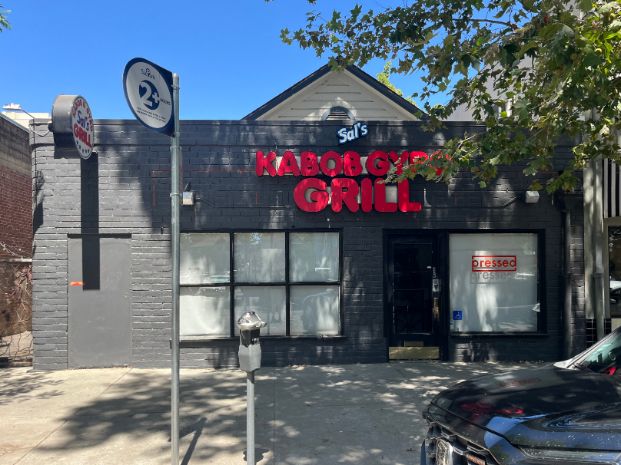
Mom Guess What! Office – 1725 L Street Read the landmark nomination.
Mom Guess What! Office – 1725 L Street
1725 L Street is significant for its association with Mom...Guess What...! (MGW), one of Sacramento’s longest-running LGBTQ newspapers. Founded by Linda Birner in 1978, MGW operated from this location from approximately 1988 to 2003. Published monthly and distributed throughout the Sacramento region, the newspaper served both gay men and lesbians at a time when the two communities often maintained separate social networks. In addition to news and commentary, MGW connected readers with LGBTQ-affirming businesses, doctors, therapists, sports leagues, professional organizations, social clubs, events, and other services. Through this role, Mom...Guess What...! became an important source of information, visibility, and community connection for Sacramento’s LGBTQ population.
The Mirage – 601 15th Street
601 15th Street is significant for its association with The Mirage, a gay and lesbian bar known for serving Sacramento’s Black LGBTQ community, particularly Black women. At a time when Black lesbians often experienced exclusion or discomfort in other LGBTQ spaces, The Mirage intentionally centered the Black lesbian experience through its music, food, staff, décor, and programming. The bar also served as a gathering place for organizations such as Gay and Lesbian African Americans (GALA), including hosting events for its 1996 “AfroCentric Weekend.” As one of the few Sacramento LGBTQ spaces specifically oriented toward Black patrons, The Mirage provided an important place for social connection, cultural expression, and community-building.
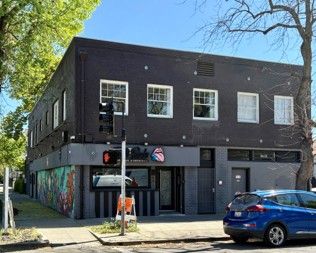
The Mirage – 601 15th Street Read the landmark nomination.
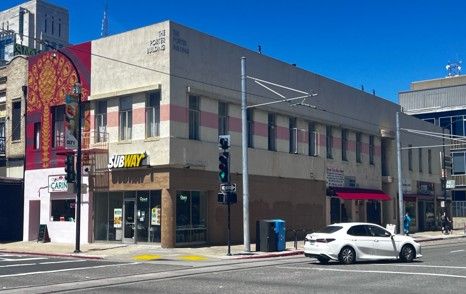
The Windsor – 729-731 J Street Read the landmark nomination.
The Windsor – 729-731 J Street
The building at 729–731 J Street was constructed in the nineteenth century as the Union Hotel and was later remodeled and renamed the Windsor Hotel. From approximately 1953 to 1957, the Windsor Bar operated covertly as a gay bar under owners Louise and George E. “Eddie” Medaris. Located near Plaza Park, a well-known cruising area for gay men at the time, the Windsor became closely associated with Sacramento’s mid-century gay community.
The bar also reflects the policing and discrimination gay men faced during this period. Men were repeatedly arrested in and around the Windsor and Plaza Park on charges such as vagrancy, loitering, and soliciting “immoral acts.” Following the 1957 arrest of a patron for allegedly soliciting an undercover officer, the State Department of Alcoholic Beverage Control investigated the Windsor, labeled it a “hangout for homosexuals,” and indefinitely suspended its liquor license. The bar subsequently closed and reopened under new ownership as The Corner.
Joseph’s Town & Country – 1454 Del Paso Blvd.
1454 Del Paso Boulevard is significant for its association with Joseph’s Town & Country, a longstanding LGBTQ bar operated by Sacramento bar owner Joseph Migliaccio. Migliaccio began working in Sacramento’s gay bar scene in the 1970s, operating several LGBTQ establishments throughout the region. Joseph’s Town & Country became a staple of Sacramento’s LGBTQ community and was notable for welcoming a broader range of patrons than many gay bars of the period. At a time when some establishments excluded lesbians, drag queens, Black patrons, and straight people, Migliaccio’s bars were known for serving the wider LGBTQ community. Joseph’s Town & Country therefore represents both the expansion of LGBTQ nightlife into Sacramento neighborhoods and the development of more inclusive gathering spaces within the local gay and lesbian community.
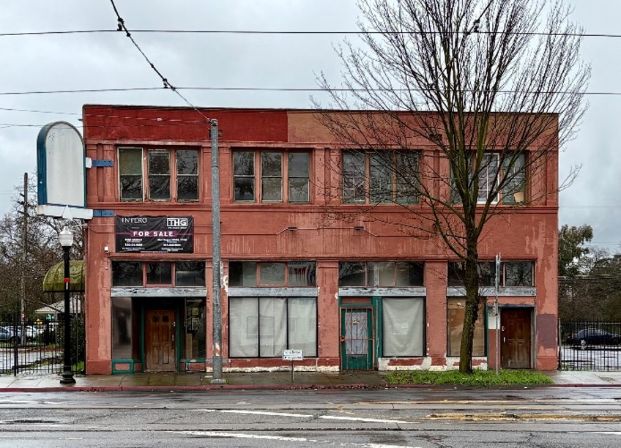
Joseph’s Town & Country – 1454 Del Paso Blvd. Read the landmark nomination.
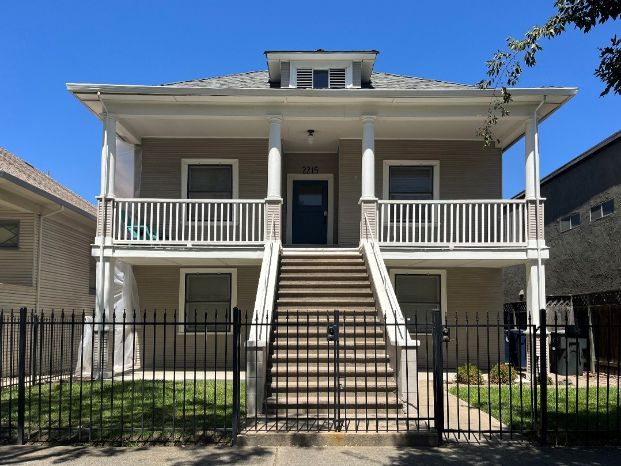
Alternative Coffee Shop – 2215 P Street Read the landmark nomination.
Alternative Coffee Shop – 2215 P Street
2215 P Street is significant as the location of the Gay Alternative Coffeehouse, one of Sacramento’s earliest known LGBTQ social spaces outside of bars. Opened in 1971 in an apartment occupied by Edgar Carpenter, a writer for Gay Voice Sacramento, the coffeehouse provided a place for young gay people to gather and socialize outside the city’s bar scene. It hosted early meetings of the Society for Homosexual Freedom (SHF), as well as community potlucks and other gatherings. The Gay Alternative Coffeehouse reflects the growth of Sacramento’s LGBTQ community organizations and the creation of new social spaces during the early 1970s.
The Blue Moon – 2565 Franklin Blvd.
A lesbian bar called The Once Upon a Blue Moon, more commonly known as the Blue Moon, opened around 1985 at 2565 Franklin Boulevard. The bar was owned and operated by Shannon Morgan, an out lesbian and local blown-glass artist who played in the local women’s sports leagues. Many gay bars, which catered to a majority white male clientele, did not welcome and often rejected lesbian patrons. As a result, lesbians in Sacramento were forced to establish their own safe spaces, social gathering places, clubs, and organizations where they could openly and comfortably express themselves. The Blue Moon was the only lesbian bar in Sacramento for much of the 1980s and became one of the most prominent and popular social gathering places for Sacramento’s lesbian community during that decade.
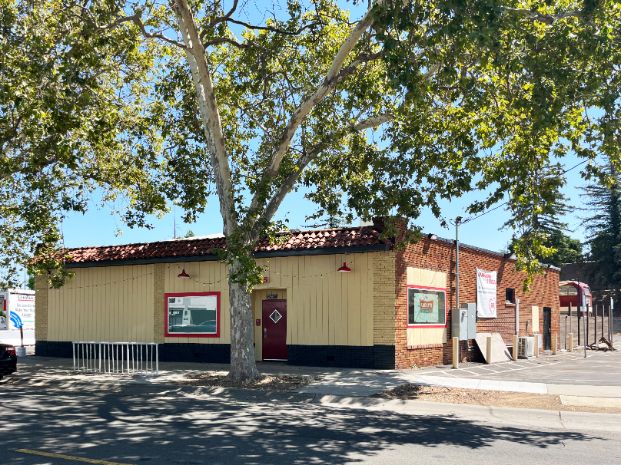
The Blue Moon – 2565 Franklin Blvd. Read the landmark nomination.
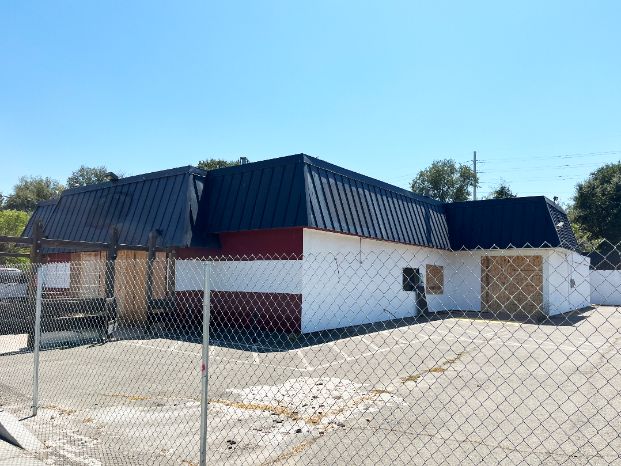
Bo Jangles – 7042 Folsom Blvd. Read the landmark nomination.
Bo Jangles – 7042 Folsom Blvd.
7042 Folsom Boulevard is significant as the location of Bo Jangles, a gay dance club opened in 1976 by Myron “Terry” Sidie. Located near Sacramento State University, Bo Jangles became a popular gathering place for younger LGBTQ people, in part because much of the club was open to patrons under age 21. The bar also reflects the discrimination and violence LGBTQ people continued to face despite their growing visibility during the 1970s. In 1979, four Bo Jangles patrons were wounded when someone fired into the crowded patio from nearby Highway 50. Despite such threats, Bo Jangles remained an important social outlet and gathering place for Sacramento’s LGBTQ and later punk communities, with bands such as Nirvana, Cake, and The Deftones performing there early in their careers.
Frequently asked questions
What is the current status of these nominations?
The historic district nomination effort is currently paused. The City has not determined whether or when to proceed with landmark or historic district nominations. If the City moves forward with a historic district nomination or another form of recognition, additional engagement with community members, stakeholders, and property owners will help inform that effort.
Are there other ways besides historic designation that the City recognizes significant cultural history?
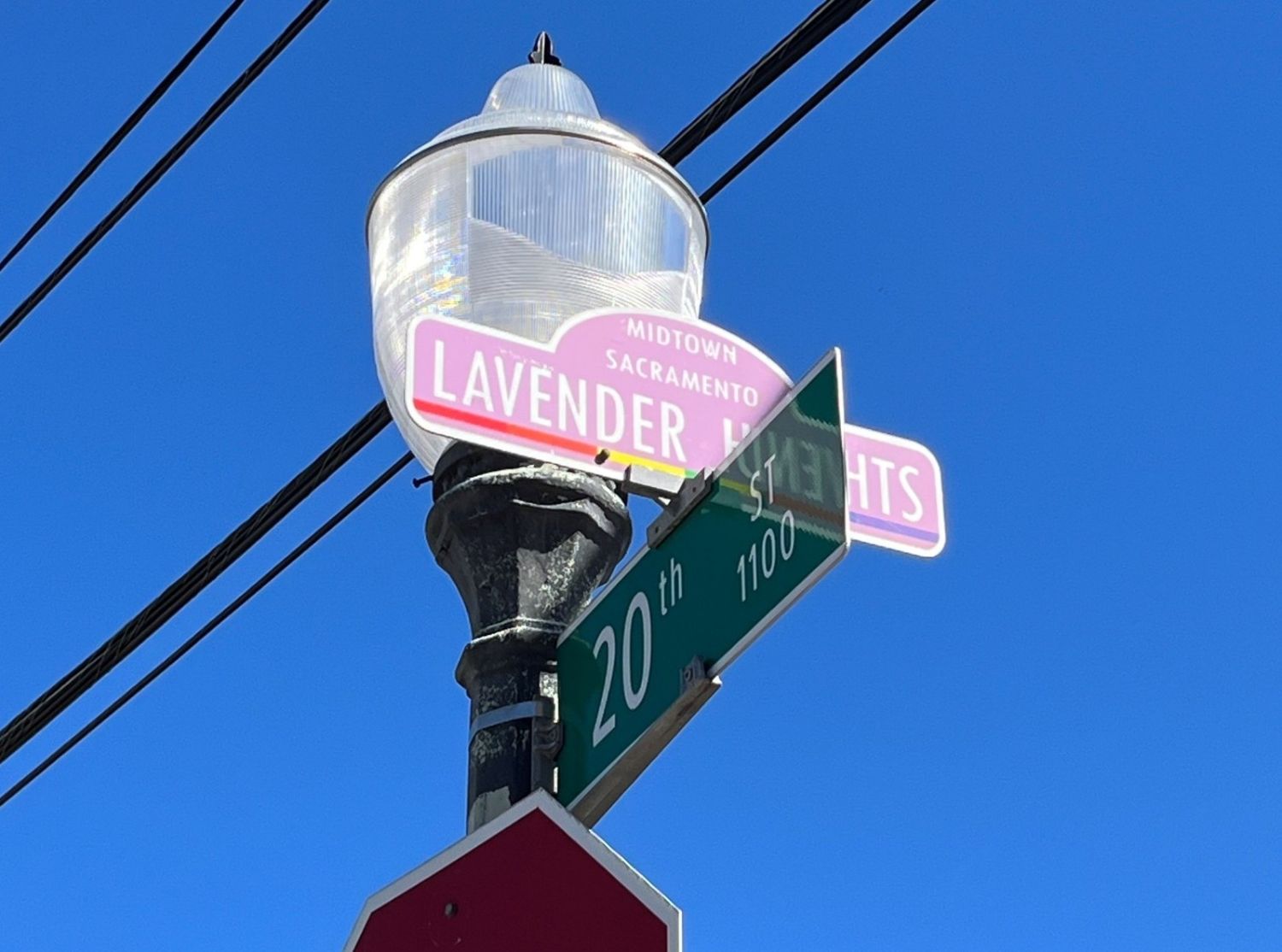
The City’s Department of Convention and Cultural Services is considering options for establishing a cultural district that could support recognition and celebration of the area’s LGBTQ history and community. This work would build on the City Council’s 2015 resolution, which led to the installation of rainbow crosswalks and street sign toppers. The form and scope of any additional cultural district action remain under consideration.
How did the city identify these buildings as potentially historic?
These properties were identified as part of the LGBTQ Historic Experience Project through historical research and with extensive community outreach. Dedicated community members shared their experiences as LGBTQ rights advocates, business owners, and residents to create a more complete historic narrative. The recurring themes and important places guided the city’s research and documentation efforts.
Why would the City consider making Lavender Heights a Historic District?
Historic districts are created when there is a concentration of buildings that are connected through a significant theme or event. In this case, the buildings have a significant association with the LGBTQ community, and their proximity to one another is important to telling that story. Extensive research has shown that historic districts tend to have higher property values, sense of pride among property owners, and attract visitors both locally and from outside the region.
What is a contributing resource vs. a non-contributing resource?
Historic districts typically contain a mixture of property types, including old and new buildings, vacant parcels, and parking lots. Listing a historic district does not make all of those properties historic. Buildings that are associated with the theme (in this case LGBTQ history) are contributing to the historic district, whereas a building or vacant parcel without a connection to the theme would be a non-contributing resource. Non-contributing resources are not listed in the Sacramento Register when a district is established.
I own a contributing resource; will there be restrictions on what can be done to the buildings?
There will be no changes to the permitting process by which staff reviews applications. Sacramento has Citywide Design Review, meaning design review staff already reviews requests for all exterior alterations and new development. Within historic districts, preservation staff (rather than design review staff) performs design review for consistency with the Secretary of the Interior’s Standards. Historic listing ensures that requests to demolish buildings go through a public process.
I own a non-contributing resource; will there be any new restrictions?
Within the proposed Lavender Heights Historic District, unlike districts with architectural significance, non-contributing properties would be subject to the same design and zoning guidelines as they are today. There will be no additional design guidelines imposed on non-contributing properties within the district.
What are the benefits of historic listing?
Historic listing has many tangible and intangible benefits. There are multiple financial incentives available to property owners to help offset costs associated with owning an older building. Incentives include the Mills Act, state and federal tax credits (for properties listed on their respective registers), and the California Historical Building Code. Visit our Preservation Incentives page to learn more. If the historic listings do not move forward, what happens? Since the buildings have been found to be eligible historic properties, state law requires them to be treated as if they were historic should a property owner propose to demolish them. Despite this required de facto historic status, there will be no benefits that come with official historic listing.
Will listing as a historic property make my property values go down?
Historic listing does not determine a property’s market value. Value depends on many factors, including the building’s condition, location, permitted uses, and the real estate market. Listing can also make owners eligible to apply for incentives such as the Mills Act program, but the City cannot predict how designation will affect the value of an individual property. A number of economic studies have shown that property values in historic districts are typically higher than similar properties outside of the district.
Can historic properties be insured?
Yes. Historic properties can be insured, although coverage, premiums, and repair or replacement terms vary by building and insurer. Owners should tell their insurance agent about the building’s age and historic status and ask whether the policy provides appropriate coverage for its materials and features.
If listed, will I be required to open my property for historic tours or install a plaque?
No. Listing does not require an owner to offer tours or allow the public inside. Owners decide whether to participate in any tour or other public program. Historic plaques can be purchased by the property owner if they choose; they are not required to be installed on a listed building.
Are there limits on what color I can paint my building?
No. Sacramento’s historic district standards do not regulate paint color. If a project involves work such as painting previously unpainted brick or altering historic materials, contact preservation staff before starting that work.