McKinley Village Art
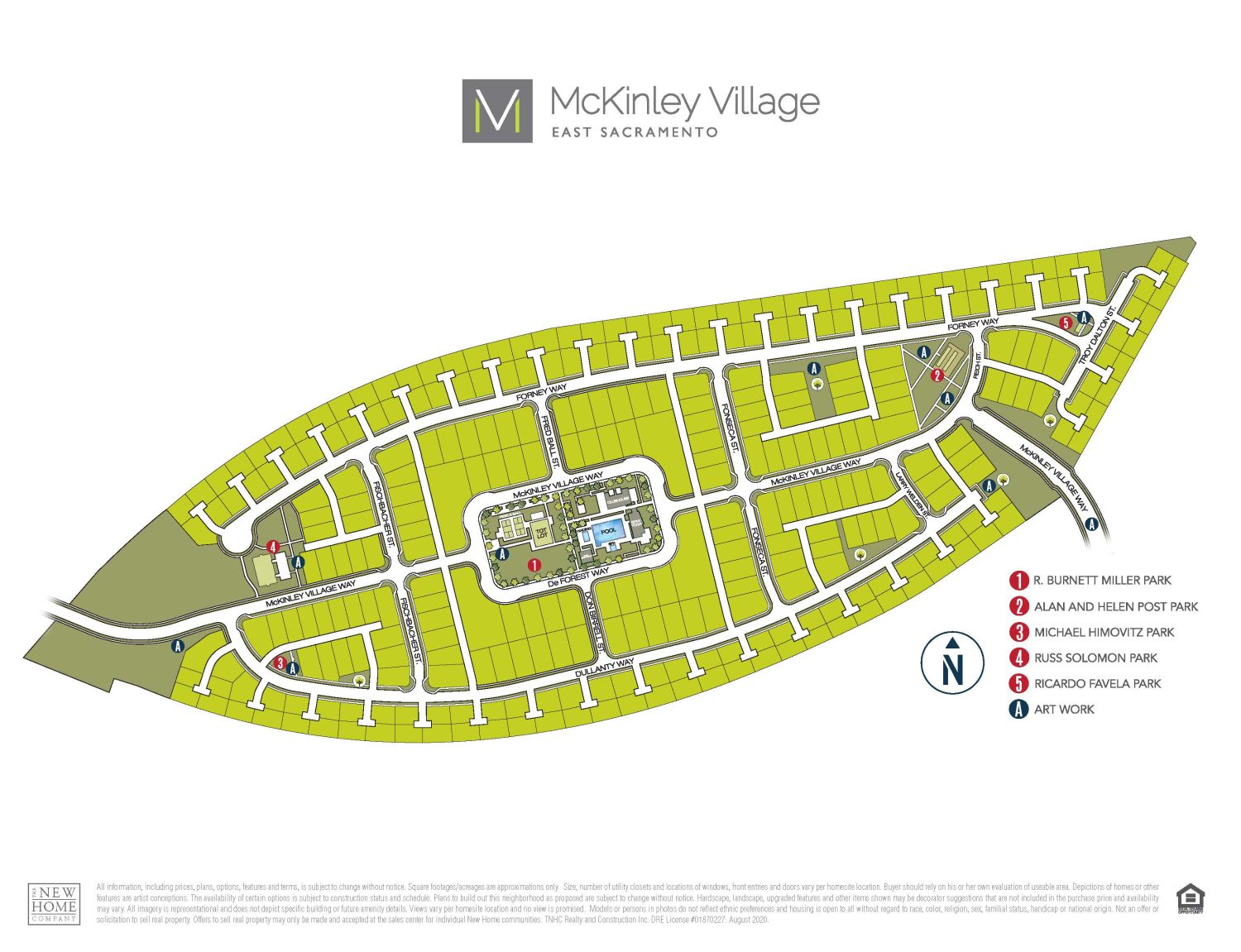
Established in 2016, this neighborhood celebrates local artists and their art.
A Neighborhood Designed to Celebrate Art in Sacramento
The Mckinley Village Art Walk celebrates Sacramento’s creative spirit, bringing art into everyday spaces where people live, gather, and explore. Along its streets, parks, and gathering areas, outdoor artworks invite you to slow down, take a closer look, and get to know the neighborhood more personally. A casual stroll or bike ride becomes a chance to discover something unexpected, share a conversation, and experience Sacramento’s individuality and creativity.
The Mckinley Village Art Walk grew as a privately funded partnership between the Sacramento Metropolitan Arts Commission and the McKinley Village development team. This partnership emerged from a vision to incorporate art into everyday life. A community panel including development representatives, renowned artist Wayne Thiebaud, and former civic leader Mayor Burnett Miller, carefully helped select each artwork and guide their design. Their collaborative efforts helped shape a walk rooted in Sacramento’s creative community, bringing local perspectives into the spaces residents and visitors share.
From a towering leaf sculpture that echoes the city’s canopy of trees, to a painted tractor that highlights its farm to fork roots, each of the ten artworks connects the neighborhood to the stories and histories of Sacramento. Every piece illuminates a different identity, creating moments of reflection and surprise along the way. Together, each work is a reminder of the power that art holds in bringing people closer while fostering a community.
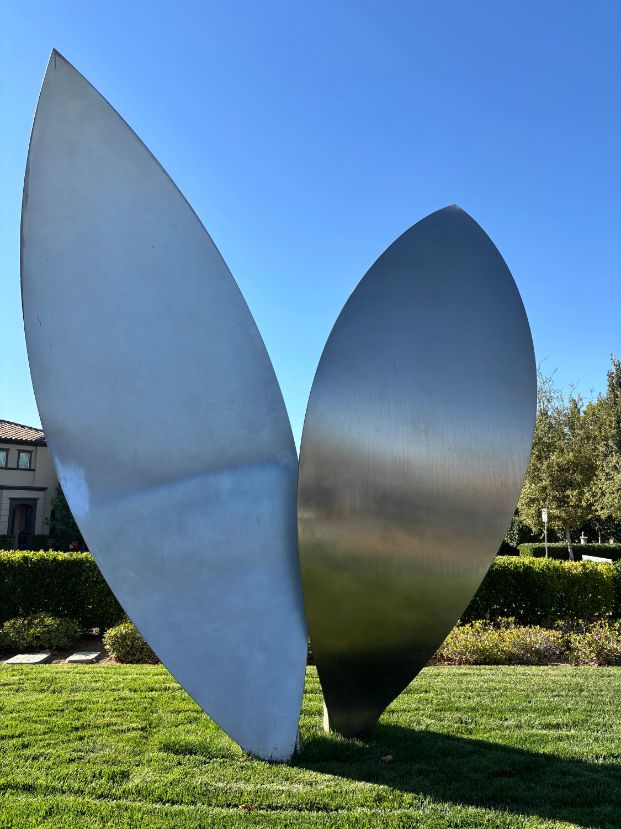
La Feuille by Marc Foster, 2016
La Feuille by Marc Foster is located at the entrance to McKinley Village in the Alan and Helen Post Park. The sculpture is anchored by two leaf-shaped structures made of honed stainlesssteel standing approximately 18 and 15 feet tall, with Corten-steel branches extending above and beneath the ground in either direction. According to Foster, the artwork pays "homage to trees and, more specifically, leaves." McKinley Village is shaped like a giant leaf and current plans call for the planting of more than 1,800 trees in the neighborhood.
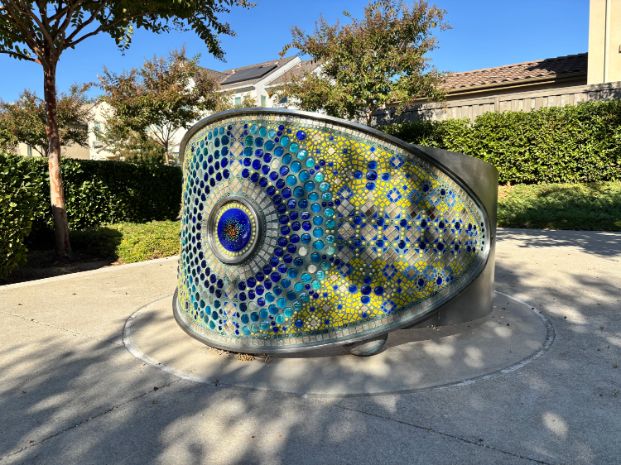
The Ring by Brenda Louie
Wearing a ring has many different meanings that can cross culture, history, religion, gender, and relationships. Wearing a ring can signify marriage, professional status, or just be an accessory.
In this case, The Ring is meant to be a visual signifier for universal love and peace. The firmness of the steel is in contrast with the elegance of the blue and gold glass tiles. The combination of the two are meant to signify permanency and the beauty of human dignity.
The Ring also has a personal connection to the Sacramento community. It is marked on the back with “Cheers Russ,” in a similar way in which rings might be etched with a wedding date, a name, or expression of love. “Cheers Russ” was created using the signature of Russ Solomon, one of Sacramento’s most beloved arts supporters and the founder of Tower Records.
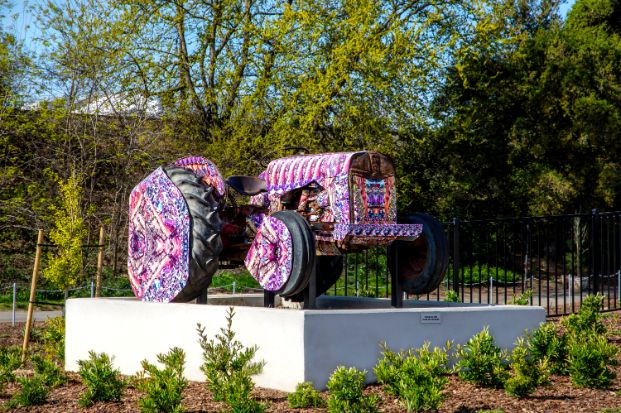
Tractor Levitation by Jeff Myers
Tractor Levitation is a life-size tractor clad with aluminum. The aluminum is printed with farmland images taken by Myers from an airplane. The process for transferring the images to aluminum is called dye sublimation, a state-of-the-art process in which photo images are heat treated into the metal.
The images come from two series of work Myers created after he returned to California from New York. Titled, "the Land Series" and "the Boyden Series," both bodies of work deal with the great contrasts, and yet critical links, between the frenetic digitized urban consciousness and the quiet stillness of agricultural land.
Antiquated farm machinery became a starting point. "The tractors and threshers seem to be the holders of secrets, much like a Zen Koan," says Myers. Using reverse perspective, Myers layers cities such as Tokyo or New York around and within the giant machines. This interaction creates a type of hybrid ag/urban metaphor.
Wildlife on a Ferriswheel by James Piskoti
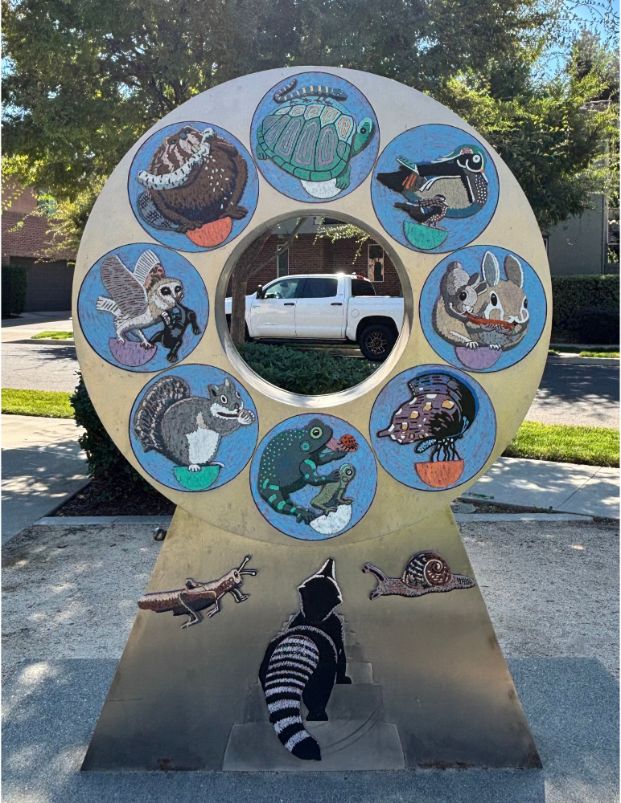
Wildlife on a Ferris Wheel, located in Michael Himovitz Park in the southwestern corner of McKinley Village, is a 72" x 48" steel and painted sculpture in the rough form of a Ferris wheel. The surface of the wheel is painted with pairs of whimsical animals including a giant grasshopper, raccoon, rabbits, and birds. Widely known in the Sacramento region for his kinetic paintings of satirical urban situations, Wildlife on a Ferris Wheel is a departure for Piskoti. Over the last two years, Piskoti has begun to use animals in his work for the first time. The animals in Wildlife on a Ferris Wheel are comical, fun, and almost human-like.
Clearing by Gina Werfel
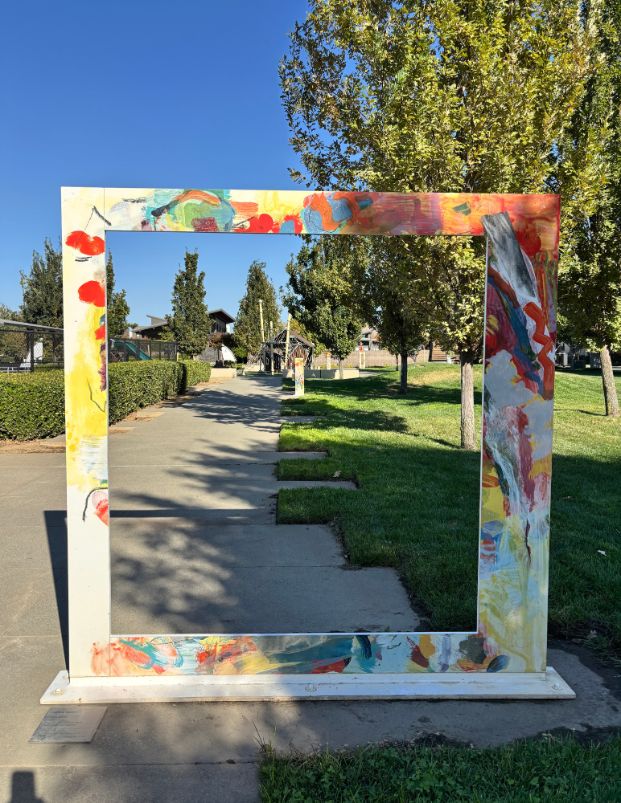
Clearing breaks apart an existing painting into fragments that pedestrians will discover along the walking path that moves vertically through R. Burnett Miller Park. Viewers will be challenged to imagine how it all fits together and see it as part of their landscape. A six-foot panel in the shape of a frame, allows pedestrians to physically enter the painting. The placement of these panels allows the actual landscape to interact with the painted marks on the images, so the painting is no longer a passive presence in the park. The artist's painting suggests a connection between her abstract marks and the place. There are seven panels of varying sizes and shapes, three of which have windows cut out in irregular intervals. The remaining four are of varying dimensions. The backs of each are solid colors that reflect the same proportions of colors that are in the painting.
Everyday Light by Hearne Pardee
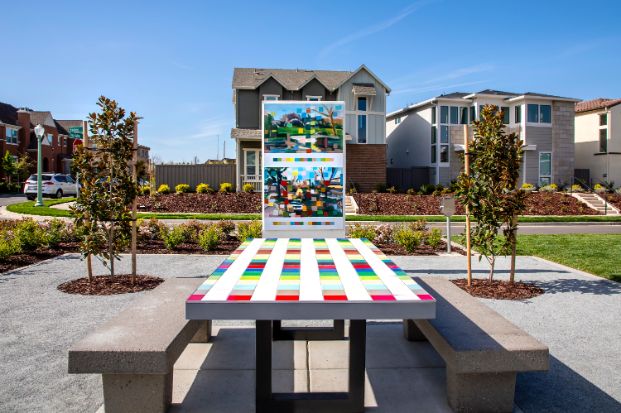
The centerpiece of Ricardo Favela Park is Everyday Light by Hearne Pardee. The installation consists of an eight-foot tall wall facing a rectangular table and benches. Two paintings by Pardee that were photo-transferred onto porcelain grace both sides of the wall. The images reflect the varying qualities of light in the park at different times of day and in different weather conditions. Beneath each image is a "color key" consisting of squares of color pulled from the images by Pardee that represent the quality of light in the park. Pardee also transferred these colors to tiles installed across the length of the tabletop. He alternated tiles depicting morning and evening light, creating a pattern that suggests a woven textile. The overall effect of the installation is quiet and contemplative. It provides a context for social occasions - a place for visitors and residents to look at the paintings and observe the dynamic colors and changes in natural light occurring every day in the park
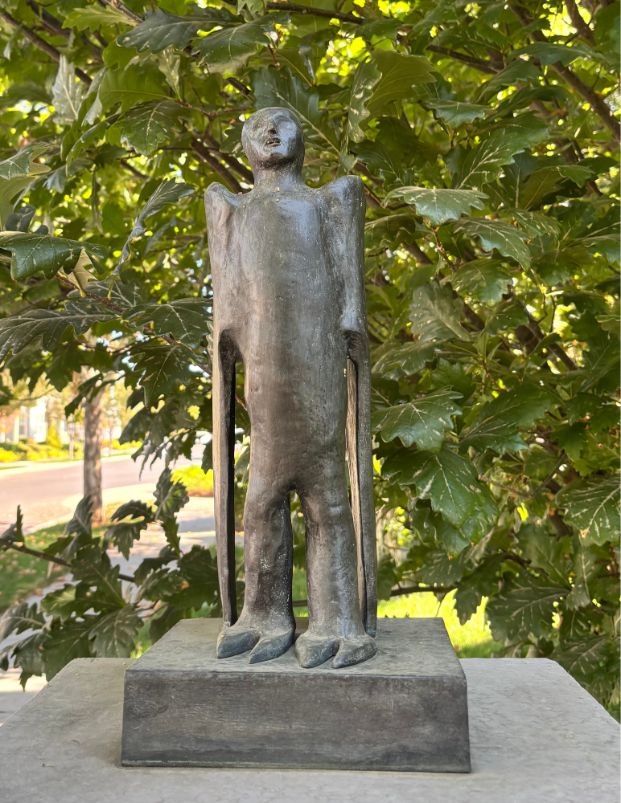
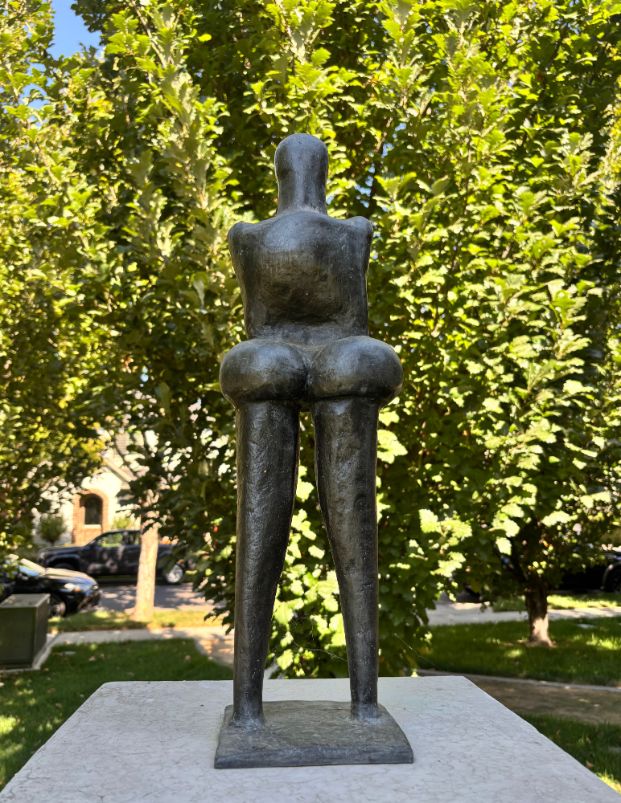
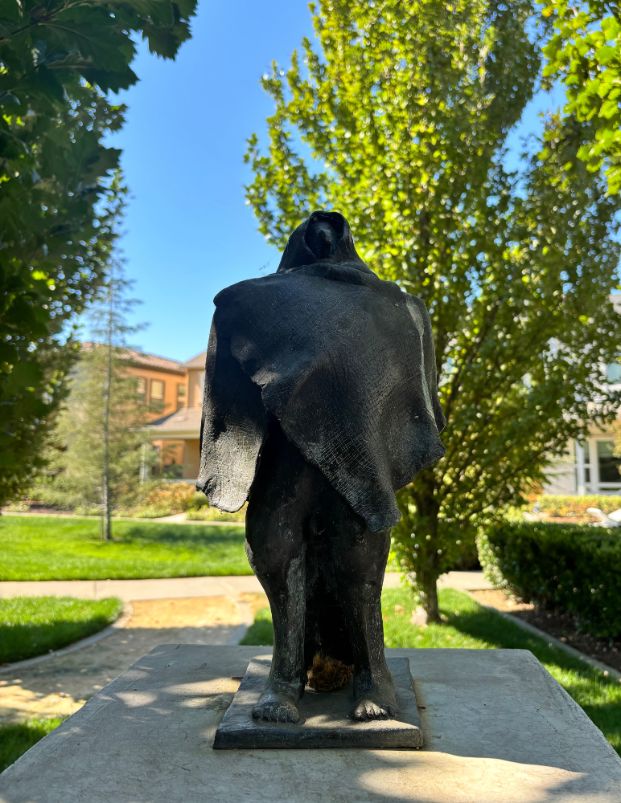
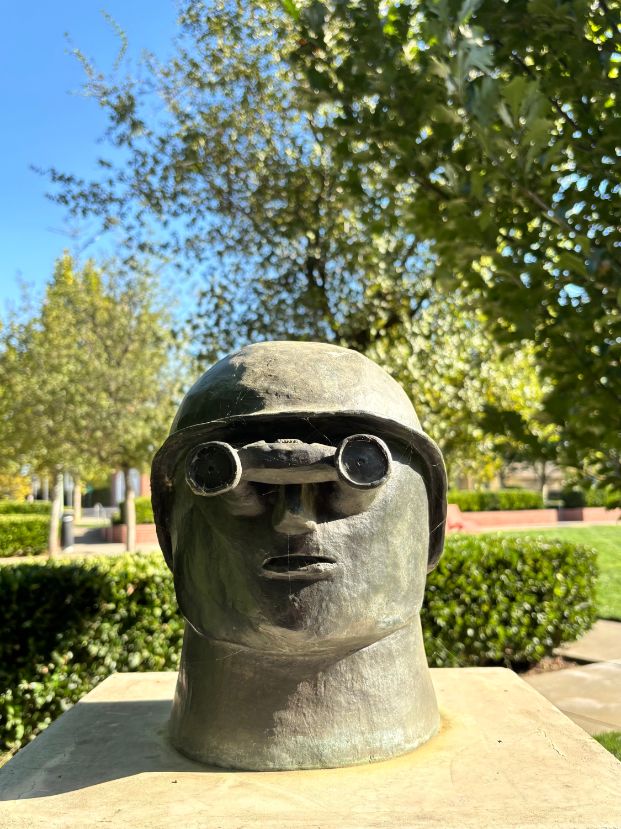
Helmet Head Chicken Colonel
Helen Post
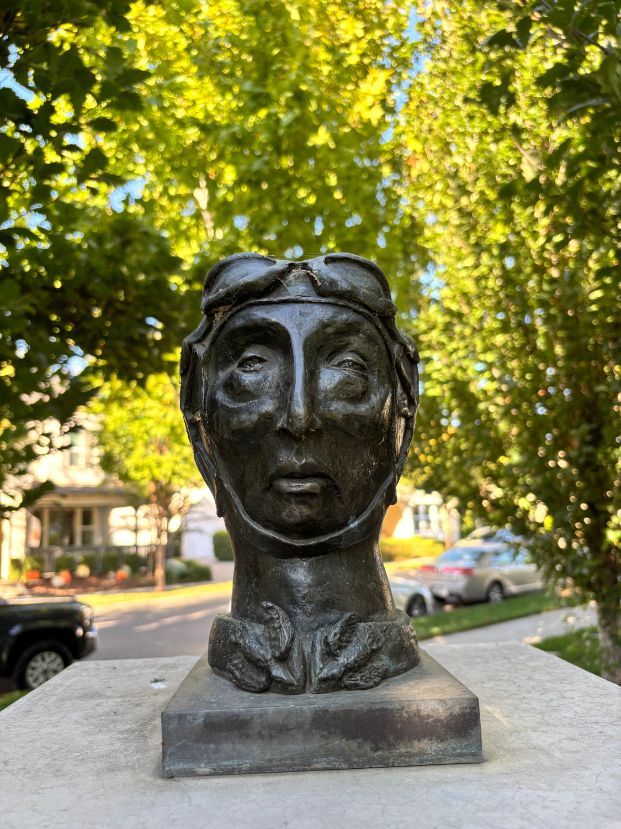
Largely self-taught, Helen became one of Northern California's most expressive and innovative sculptors. Although her earliest works included stone, wood, and metal, and frequently incorporated found-objects, her pieces were soon exhibited almost exclusively in bronze. Always imaginative and unique, and frequently humorous, her works encompass a broad variety of subjects. They range from animals, such as monkeys, birds, and goats, to human figures and occasionally fanciful combinations of the two.
(From her obituary in the Sacramento Bee, 2010)
Helen Post Park