
Six Point Plan Launch
February 2026
Launch of our Six Point Plan to address unsheltered homelessness
I wanted to share a brief update on our Six Point Plan to address unsheltered homelessness. Last year, we zeroed in on assessing our shelter services – what’s working, what’s not, and how we can make the most of the limited money we have. Through this work, we’ve made significant progress. The number of unsheltered homeless individuals dropped by 30% from 2022 to 2024, and, over the past 15 months, the City has opened more than 500 new beds. While we’re not done yet, we’ve embarked on an ambitious but achievable Six Point plan to open another 600 beds by zeroing in on more cost-effective solutions.
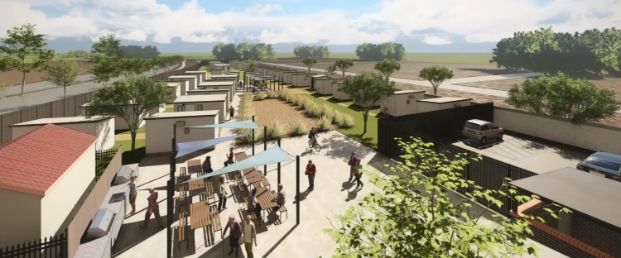
This plan includes locations across the city with a variety of solutions to meet homeless residents where they are. I appreciate the council’s embrace and acknowledgment of the desire to focus on cost-effectiveness, outcomes, accountability, and citywide solutions.
Below is a breakdown of our Six Point Plan.
1. Safe Camping: A low-barrier-to-entry Safe Camping Site prioritizing people experiencing homelessness in the River District. The City will provide tents, restrooms, showers, trash collection, charging stations, outreach staff and security. Residents are allowed dogs and 2 large bins of belongings. Construction is underway, and this site is on track to open in April 2026.
Much appreciation to Councilmember Pluckebaum for collaborating with the River District stakeholders to address implementation issues. With increased enforcement and collaboration, the River District will experience a net decrease in adjacent unsheltered homelessness after the launch.
2. Safe Parking: A low-barrier-to-entry Safe Parking Site where people can park and sleep in their vehicles safely. The City will provide restrooms, trash collection, charging stations, outreach staff and security, and can accommodate 60-80 vehicles. Vehicles must be registered and operational. We are in the process of negotiating a lease for a site in District 6 and exploring other potential locations.
I’d like to thank Councilmember Guerra for his continued efforts to identify a workable safe parking location in District 6.
3. Micro-Communities: Tiny home Micro-Communities will play a crucial role in our homelessness response strategy, especially for our senior population as they are one of our fastest-growing homeless populations and need long-term support and dignity. We’ve found that Tiny Homes are more cost-effective and lead to better stability and outcomes for residents, and we will be launching three City-funded senior communities of 40 tiny homes, 120 sq. ft. each. The City will provide electricity, heating/AC, Wi-Fi, refrigerators/freezers and microwaves, shared bathrooms, showers, laundry, gardens, dog runs and gathering spaces. After a 90-day stay, residents can choose to commit to a long-term stay and pay 30% of their income, in line with affordable housing standards. Locations will be disbursed throughout the City. All currently identified sites are on track to begin construction in April 2026.
I want to thank Councilmember Lisa Kaplan for recognizing that we’re all in this together and personally identifying a parcel in Natomas for a micro-village site. We appreciate your courageous leadership. Many thanks to Councilmembers Mai Vang and Caity Maple for working on implementation issues with your South Sacramento and Woodbine communities, respectively. Lastly, I’d like to thank Councilmember Jennings for his continued, diligent work to establish a District 7 location.
4. Homekey Tiny Homes: The City is applying for a State grant for a new model of permanent supportive housing using tiny homes for seniors and veterans. These homes are cost-effective, community-oriented, and combine subsidized housing and on-site supportive services for residents. We have submitted an application to the State to fund these sites and have identified two locations – one in north Sacramento and a possible second location in south Sacramento.
Many thanks to Councilmember Dickinson for fine-tuning our State of California application to ensure its success.
5. Motel Program 2.0: Last year, the City’s audit of its existing Motel Program found that it is not cost-effective and had a low rate of successful exits into permanent housing. Due to this, the City is converting the Program to voucher-based, increasing resident engagement with supportive services. This change to the program is in progress now, and will save the City $2 million, which we are putting directly back into the program to increase capacity by 90 beds.
6. Robin Moore Tiny Home Grant Program: The final piece of our Six Point Plan is our Grant Program, inspired by Robin Moore, an everyday Sacramentan who has stepped up to build tiny home shelters in her own backyard with more than a 90% success rate. Our office is developing a Tiny Homes Grant Program in partnership with organizations and businesses across the region. We will provide interested faith-based organizations and non-profits with tiny homes for homeless residents, funded through sponsorships. Currently, there are enough proceeds to launch the program with 15 tiny homes. This initiative is on-going as we meet with potential administrative partners who have the experience and knowledge necessary to ensure this program is a success.
Thank you to Vice Mayor Talamantes for co-chairing the Robin Moore Tiny Homes Grant Program with me.
I am proud of the work we have done to mobilize and shift resources to help the most people possible, and I am especially thankful for the dedication and enthusiasm of my City Council colleagues to bring this Six Point plan to life. With this plan, we can best meet the needs of all Sacramentans within the confines of our City’s limited budget, ensure accountability to taxpayers, while prioritizing a clean and safe Sacramento.