
Hackett House
Project summary
In early 2025, the City of Sacramento Preservation Office secured a grant through the National Park Service to prepare a Network to Freedom nomination for the former site of the Hackett House; a key site associated with freedom-seeking African American, Archy Lee. This project follows up on the African American Experience Project (2023), which created a historic context and survey of African American history in the City.
Project highlights
- Grant secured for $14,000 from National Park Service
- Contract awarded to Groundwork Preservation, LLC to complete nomination
- Project timeline: Ongoing through May 2026
About Archy Lee and the Hackett House
Echoing the nationwide increase in abolitionist activity during the mid-19th century, several important trials were held in Sacramento in the 1850s and 1860s that challenged the hypocrisy of California’s status as a free state with proslavery laws. In 1857, a young enslaved Black man named Archy Lee was brought to Sacramento from Mississippi by a white man named Charles Stovall. At the time, California state law allowed visiting slaveholders, such as Stovall, to enter the state as long as they did not permanently settle in California. However, after their arrival, Stovall opened a school. When Lee learned of Stovall’s plans to take him back to the South, he fled to the Black-owned Hackett House hotel but was quickly captured and arrested.
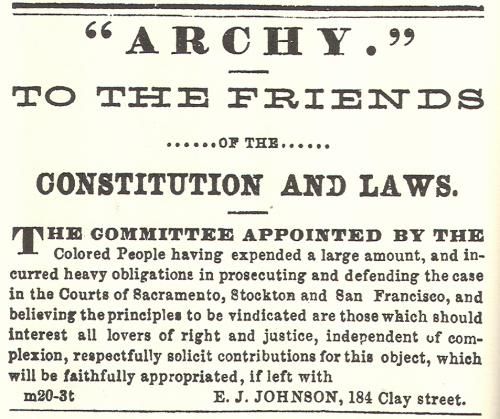
The local Black community mobilized in support of Lee, holding church fundraisers to collect money for his legal defense. Mary Ellen Pleasant aided in the efforts to free Lee, helping to hire lawyers to represent Lee and arranged to hide him. Prominent white attorney and founder of the Crocker Art Museum, Edwin B. Crocker, defended Lee in front of the California Supreme Court in Sacramento, arguing that Stovall had violated state law because he had established residency in the state when he opened his school. The judge ruled in Lee’s favor, setting him free. Despite later attempts to have Lee rearrested, he ultimately achieved his freedom and resettled in British Columbia.
Despite its historical importance, there is currently no historical marker or educational installation at the Hackett House site to inform the public about the significant events that took place there.
By highlighting this significant but underrepresented story through the Network to Freedom program, the City will enhance public understanding of its rich African American heritage, aligning with the NPS Network to Freedom program's mission to honor, preserve, and promote the history of resistance to enslavement.
Any questions?
Contact Preservation@cityofsacramento.org.