
Dewatering
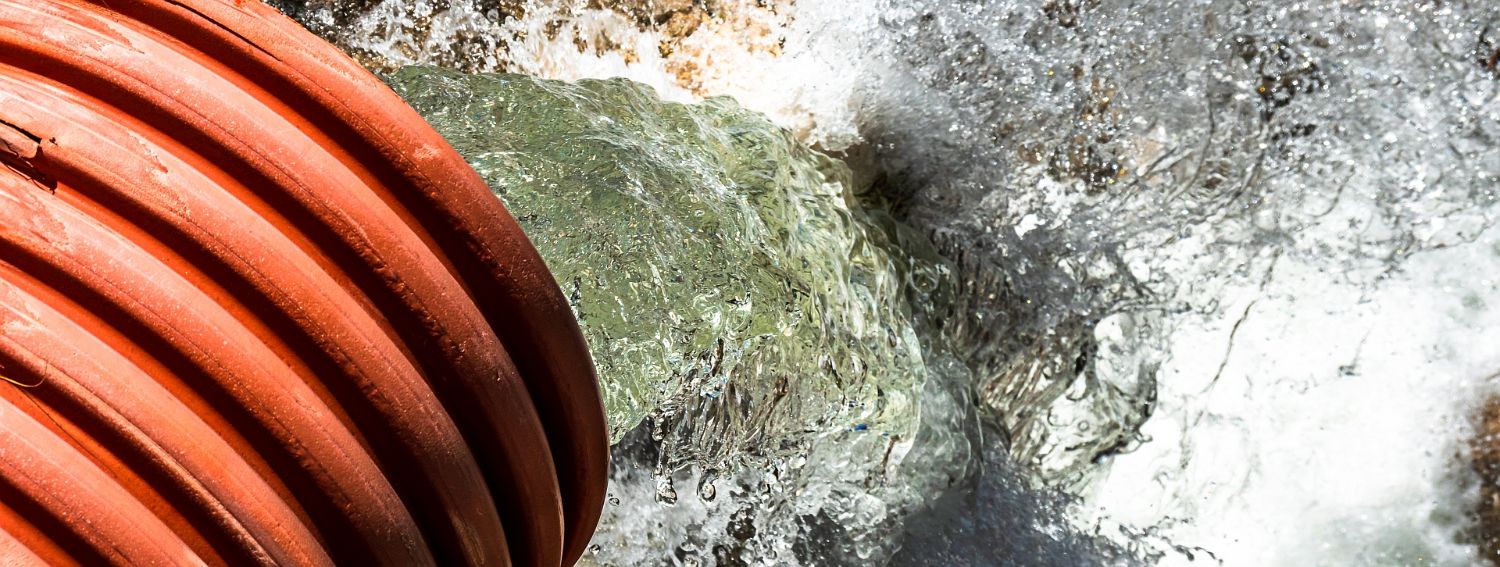
Dewatering is the process of removing excess water in an excavation or impoundment by pumping or other mechanical means, according to the State Water Resources Control Board.
Dewatering discharges are subject to federal, state, and local regulations because they may contain pollutants that could be discharged into waterways.
Depending on the location of the dewatering operation and the time of year, the City’s combined sewer system, separate sewer system, or municipal separate storm sewer system (MS4, drainage system) can be significantly impacted from temporary dewatering discharges.
Permission from the City -- through an approval letter or a Memorandum of Understanding (MOU) -- is required for all discharges to the City’s systems.
Typical types of dewatering discharges are:
- well development water
- pump/well testing
- pipeline/tank pressure testing
- pipeline/tank flushing or dewatering
- groundwater extraction and/or cleanup projects
- construction dewatering
- water supply system flushing
- filter backwashing
- equipment decontamination
- wastewater from cleanup sites
Construction dewatering
Construction dewatering operations may occur when a project site has high groundwater levels or when construction stormwater is contained onsite in sediment basins, trenches, or low points.
Since construction dewatering operations can result in large volumes that exceed the capacity for municipal sewer systems, all discharges to the City’s combined sewer system, separated sewer system, and drainage system require permission from the City through an approval letter or MOU.
Chapter 13.16, Stormwater Management and Discharge Control of the City's code governs and controls non-stormwater discharges to the City’s stormwater conveyance system and protects water bodies from pollutants consistent with State and Federal regulations.
Since pollutants in construction dewatering operations may exceed the water quality standards for municipal stormwater systems, dewatering discharges must be covered under one of the following permits:
- 2022 Construction General Permit
- City’s Municipal Separate Storm Sewer System (MS4) permit
- Another permit issued by the Central Valley Regional Water Quality Board
Although the State Water Resources Control Board's 2022 Construction General Permit authorizes dewatering of impounded stormwater that hasn't come into contact with contaminants to the City’s drainage system, the City must issue an approval letter or MOU prior to discharges occurring. Note that the 2022 Construction General Permit, Attachment J, does not permit discharge in areas with known soil and/or groundwater contamination.
Projects discharging to the City’s drainage system that do not have an approval letter or MOU will be issued a stop-work order, notice of violation, and/or administrative penalties based on the severity of the violation.
Groundwater dewatering
Groundwater dewatering typically occurs when a project needs to pump and remove groundwater for constructing foundations, basements, utilities, or other underground structures.
Groundwater discharges to the drainage collection system must be covered by a permit issued by the State Water Board or the Regional Water Board.
In the Sacramento region, concentrations of naturally occurring metals in groundwater can exceed water quality standards for receiving waters. Therefore, in Sacramento, groundwater cannot be discharged under the 2022 Construction General Permit, Attachment J, without groundwater sampling. The groundwater sampling results must be provided to the City for review prior to any discharge to the storm drain collection system.
If sampling shows that there are pollutants in the groundwater that would cause or contribute to exceedances of water quality standards, a Limited Threat Discharges To Surface Water permit must be obtained from the State Water Board whether the groundwater is going to be discharged to surface waters, infiltrates into an onsite basin, or if the water will be used as dust control.
Temporary discharge process
The temporary discharge process manages discharges into the City of Sacramento’s combined sewer system, separate sewer system, or municipal separate storm sewer system (MS4, drainage system).
This process is intended to ensure that the City’s systems are not significantly impacted from temporary discharges and confirms discharges are allowable per City code. Temporary discharges may require discharge monitoring as part of the permit and/or as part of the City's approval letter or MOU issued by the City.
Discharges to City’s sanitary and combined sewer systems are treated by SacSewer, Sacramento’s regional sanitation district, and require a Temporary Wastewater Discharge Permit in addition to an approval letter or MOU issued by the City.
In addition to an approval letter or MOU issued by the City, discharges to the City’s storm sewer drainage system require coverage under one of the following:
- 2022 Construction General Permit
- City of Sacramento MS4 Permit
- Limited Threat Discharges to Surface Water permit issued by the State Water Board
For all discharge questions and locations or to start the process for a temporary discharge, email the Temporary Discharge Application to dischargerequest@cityofsacramento.org.
Contact us
If you have any questions regarding the City's Temporary Discharge requirements, contact us at dischargerequest@cityofsacramento.org
For application and information on SacSewer Temporary Discharge Permit, contact Sabina Rynas at 916-876-6522 or rynass@sacsewer.com.
For general information, visit the City's stormwater quality program webpage.